
Product Knowledge & Guides
Air-Cooled vs Liquid-Cooled BESS Containers
Air-cooled BESS containers ship in weeks; liquid-cooled units pack 5 MWh into a 20 ft box. Compare cooling, lead time, cost and fire safety before you order.
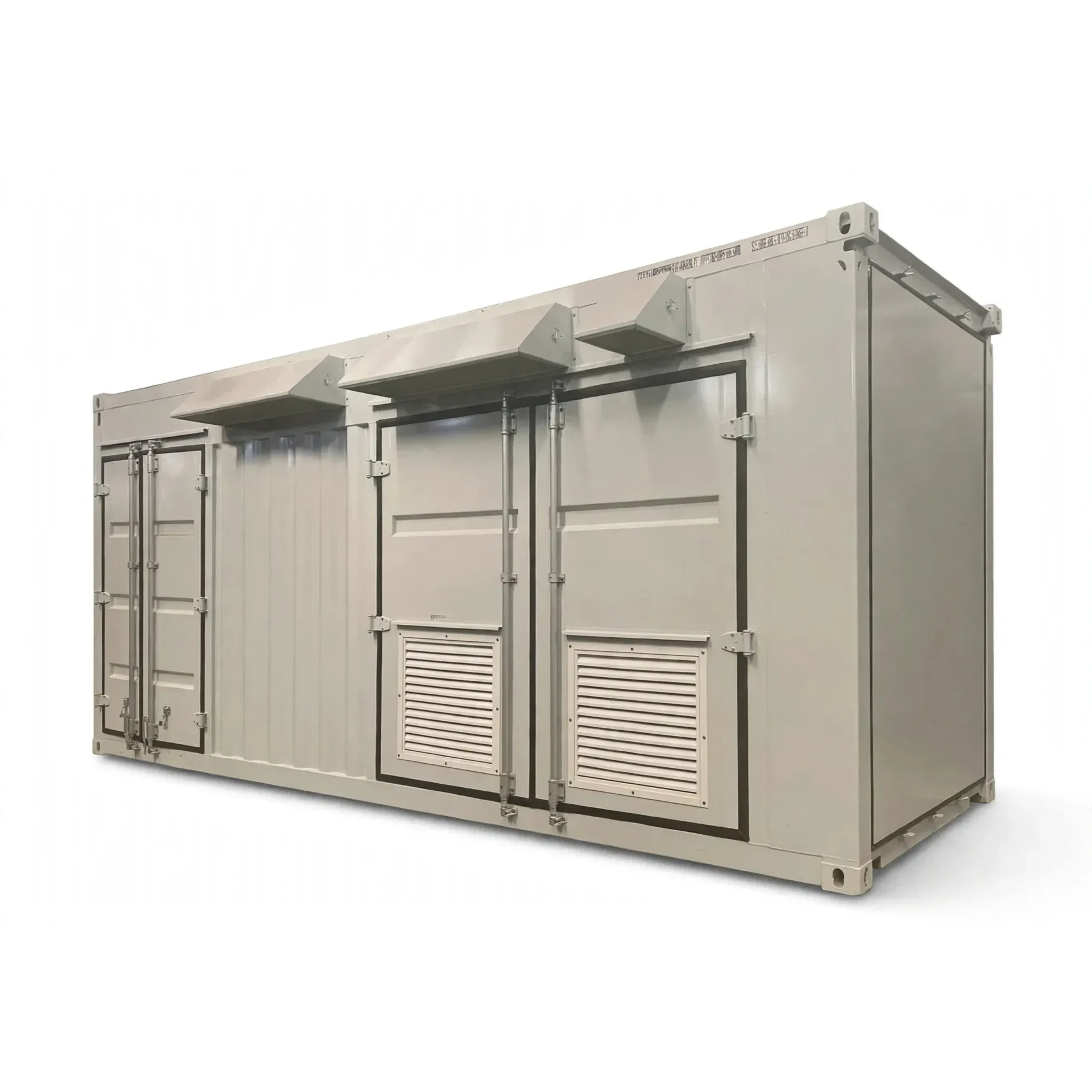
Choose air cooling when you need a battery energy storage container fast; choose liquid cooling when you need the most energy in one 20 ft box. Both need the same fire-safety homework. This guide compares cooling, density, lead time, cost and fire safety so you can order the right container.
Why do two BESS containers with the same footprint store such different amounts of energy?
Walk a battery storage yard in 2026 and you will see two containers that look almost the same from the outside. One holds about 1 MWh. The other holds 5 MWh. The difference is not the steel box. It is what happens inside: the cells, the cooling and the space the safety systems take up.
The 5 MWh figure has become the new benchmark for a 20 ft energy storage container. Manufacturers reached it by combining large-format 314Ah lithium iron phosphate cells with liquid cooling, which removes heat far more effectively than air and lets racks sit closer together. CATL's TENER system and Canadian Solar's SolBank 4.0 both reached 6.25 MWh in a 20 ft container at SNEC 2026, and industry reports put liquid cooling penetration above 90 percent for new large-scale container systems. That is the direction the market is moving, and any buyer comparing containers in 2026 will meet these numbers in the first sales call.
But a bigger number on a datasheet is not automatically a better purchase. A 5 MWh liquid-cooled unit needs a longer production queue, a more complex cooling loop and a different fire-safety file. A smaller air-cooled unit can ship in weeks and suits projects that cannot wait. The right choice depends on how much energy you need, how fast you need it and what your site can support. The rest of this guide works through those three questions in order.
What actually limits how much energy fits in a 20 ft container?
Three things decide the energy in the box. First, the cells. Large-format LFP cells in the 300Ah class pack more energy per rack than the smaller cells used a few years ago, and that single change did most of the work in pushing 20 ft containers from roughly 3 MWh toward 5 MWh. Second, the cooling. Air cooling needs wide gaps between racks so air can move, and those gaps eat floor space. Liquid cooling uses cold plates and a compact loop, so racks can stand closer together and the same box holds more cells. Third, the safety systems. Fire detection, gas detection, ventilation, insulation and emergency escape all take space, and the space they take is not negotiable — it is set by standards and by the test evidence behind the design.
This is why two honest suppliers can quote very different energy figures for the same 20 ft footprint. One may count only the cells. The other counts the cells plus the cooling loop, the fire system and the working clearances a technician needs inside. When you compare quotes, ask each supplier what is inside the energy figure: cell capacity alone, or the full installed system with cooling and safety equipment in place. A supplier that answers that question clearly is usually the one whose number survives installation.
A further check matters for buyers who plan to add capacity later. A container designed around one cell format and one cooling loop is hard to extend. If your project may grow from one container to several, ask how the next unit connects, whether the cooling and monitoring systems are shared or separate, and what changes at the site when a second or third container arrives. The answers belong in the quotation, not in a conversation after delivery.
Which cooling type fits your project?
The honest answer is that it depends on the size of the project and the date it must be live. For commercial and industrial projects below about 2 MWh, lead time is often the deciding factor. Industry reporting in 2026 notes that delivery time has become the first selection criterion for C&I buyers in this size range, and air-cooled 500 kWh and 1 MWh units can ship in a matter of weeks because they use simpler cooling and standard components. If your site needs backup power or solar-plus-storage before a fixed deadline, an air-cooled energy storage container is usually the practical choice.
For utility-scale projects and large C&I sites, density usually wins. A liquid-cooled container stores several times more energy in the same footprint, which means fewer containers, fewer foundations, fewer connections and less land. The trade is a longer production queue — typically months rather than weeks — and a cooling system with more parts to maintain: pumps, piping, coolant and leak detection. If your project has the schedule to absorb that, liquid cooling is the better buy.
There is also a middle path worth asking about. Some suppliers offer air-cooled units for the first phase and liquid-cooled units for later expansion, or a hybrid layout where the battery racks are liquid-cooled and the auxiliary equipment stays air-cooled. The right question to ask is not which cooling type is better in general, but which one matches your energy target, your deadline and your maintenance team. A supplier should be able to explain the choice in those terms. If the answer is only a datasheet, keep asking.
For context on scale, the market is moving fast in both directions. India opened a 16 GWh standalone storage tender in late 2026, and commercial storage is the fastest-growing segment globally, with Wood Mackenzie expecting its share of new installations to rise through 2026. That growth is exactly why lead times and cooling choices now sit at the centre of procurement discussions rather than at the edge.
What fire safety rules apply, and what should you ask for?
Fire safety is where a BESS purchase is won or lost, and it is the part buyers most often leave until too late. After the Moss Landing fire in 2025, which burned for five days, owners, insurers and permitting authorities ask for far more fire documentation than they did a few years ago. Two standards dominate the conversation. NFPA 855, in its 2026 edition, sets the installation rules: separation distances, ventilation, gas detection, explosion protection and emergency access. UL 9540A is the large-scale fire test that shows how a battery system actually behaves when a cell fails, and its results decide spacing and suppression design.
What should you ask a supplier for? First, the UL 9540A test report for the exact configuration you are buying, not a report for a different cell or a different rack layout. Second, the fire protection design in writing: detection, suppression agent, ventilation and insulation behaviour, and emergency escape provisions for personnel. Third, the spacing the design assumes, so your site layout matches the tested configuration. A container whose fire file does not match its delivered configuration is a container that can fail its acceptance inspection.
This is also where the container itself matters. A well-built energy storage container arrives as a complete modular package — container body, battery racks, electrical system, fire protection, ventilation and insulation, emergency escape and monitoring — factory-wired and tested before delivery. That factory scope is the point: fire protection and ventilation are verified in the factory, where they can be checked, rather than assembled for the first time on a live site. When you review a supplier, ask what is factory-installed and what is left to site work. The more that is finished in the factory, the fewer surprises at handover.
What should you check before you order a BESS container?
Use this short check before you sign. First, confirm the energy figure: installed system energy with cooling and safety equipment in place, not cell capacity alone. Second, confirm the cooling type and the lead time in writing, with a delivery date your project schedule can rely on. Third, confirm the fire file: UL 9540A report for your configuration, NFPA 855 compliance, and the spacing your site must provide. Fourth, confirm what arrives factory-wired — battery racks, electrical system, fire protection, ventilation and monitoring — and what site work remains. Fifth, confirm the information the supplier needs from you: battery type and capacity, site conditions, and any electrical or safety standards the project must meet.
If you are still deciding between cooling types, the fastest way to settle it is to compare two quotations on the same basis: same energy target, same delivery date, same fire file. The cheaper quotation usually stops looking cheap once the missing items are added back. And if your project also needs the electrical side housed — switchgear, distribution and control — read our guide to the prefabricated electrical equipment cabin, which explains what belongs inside an e-house and what to verify before delivery.
To start an order, send your battery system requirements through the quote form on our energy storage container page. We confirm the container configuration with you, then build it in the factory and deliver it ready for on-site connection. Tell us the battery type and capacity, the site conditions and the standards the project must meet, and we will confirm the configuration and the delivery schedule with your quote.
Frequently Asked Questions
How much energy fits in a 20 ft BESS container in 2026?
About 5 MWh has become the standard for new liquid-cooled 20 ft units using large-format LFP cells, and some manufacturers reach 6.25 MWh. Air-cooled units in the same footprint store less, typically around 1 MWh or below, because air cooling needs wider gaps between racks.
Is liquid cooling always better than air cooling?
No. Liquid cooling stores more energy per container, but it costs more, needs a longer production queue and has more parts to maintain. Air cooling ships faster and suits smaller projects with a fixed deadline. Choose by energy target, deadline and maintenance capacity, not by the datasheet alone.
What is UL 9540A, and why does it matter?
UL 9540A is the large-scale fire test for battery energy storage systems. Its results decide spacing, ventilation and suppression design. Ask for the test report for the exact configuration you are buying, not for a different cell or rack layout.
Does NFPA 855 apply to container storage?
Yes. NFPA 855 sets installation rules for stationary energy storage systems, including separation distances, ventilation, gas detection and emergency access. The 2026 edition is the current reference most authorities use.
What information do you need to quote a BESS container?
Battery type and capacity, site conditions, and any electrical or safety standards the project must meet. With those three inputs we confirm the container configuration and the delivery schedule with your quote.
Ready to price your BESS project? Send us the battery type, capacity, quantity and delivery location for a tailored quote.